

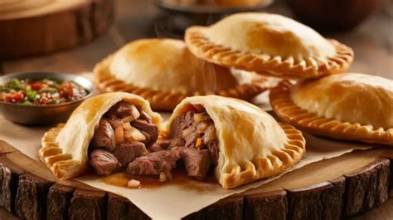
The best empanada de carne cortada a cuchillo is a pastry filled with beef chopped by hand into small cubes, not ground. The beef is cooked slowly with onion and spices and wrapped in thin, handmade dough. No single shop is best everywhere, so the practical way to find a good one nearby is to know what the real thing looks like and to ask a few specific questions before you order. This guide covers what the name means, how regional styles differ, and how to spot a genuine version.
| At a Glance | |
|---|---|
| Dish | Empanada de carne cortada a cuchillo (“knife-cut beef empanada”) |
| Origin | Northern Argentina, especially Tucumán and Salta |
| Defining feature | Beef cut by hand into small cubes instead of being minced |
| Typical filling | Beef, onion, cumin, paprika, hard-boiled egg |
| Regional additions | Boiled potato and green onion (Salta); usually no potato or olives (Tucumán) |
| Cooking method | Baked, traditionally in a clay oven, or fried |
| Recognition | Tucumán’s version topped a 2025 Visiting Argentina online poll and won a gold medal from TasteAtlas in early 2026 |
What “Carne Cortada a Cuchillo” Actually Means
The phrase translates literally as “meat cut with a knife.” It separates this style from empanadas made with carne picada, which is minced or ground beef. In northwestern Argentina the distinction is taken seriously. One Argentine food writer notes that empanadas in the northwest are always made with knife-cut meat, and that using ground beef there is still regarded as a heresy.
The difference shows up on the plate. Hand-cut cubes keep their shape and bite, and they hold juices inside the pastry. Ground beef tends to produce a finer, denser, more uniform filling. Neither is wrong, but if you search for this exact phrase, the cube texture is the point.
How Regional Styles Differ
Argentina has no single knife-cut empanada. The northern provinces share the technique but disagree on the details, and the rivalry between Tucumán and Salta is part of the dish’s identity.
Tucumán Style
Tucumán empanadas typically use matambre, a thin cut that many cooks tenderise in boiling water before chopping. The filling includes onion, cumin, paprika and chopped hard-boiled egg, and it generally leaves out potato and olives. The fat is part of the flavour: the meat is cooked slowly with onion and pepper so the filling comes out juicy rather than dry. A Tucumán custom is to squeeze a little lemon over the empanada just before the first bite. The town of Famaillá, known as the national capital of the empanada, has held a national empanada festival every September since 1979.
Salta Style
Salta empanadas are usually smaller and juicier. The beef, often a lean cut such as nalga or bife de chorizo, is cut into very fine cubes, and one regional recipe puts them at roughly one centimetre. The filling adds boiled potato, raw green onion stirred in at the end, and ají molido or local paprika. Salta cooks often bake them in a clay oven, and some versions are fried.
Other Northern Variations
Neighbouring provinces change the formula. Catamarca versions are cut by knife too, but may include raisins and potato. Jujuy fillings sometimes include peas and are known locally as recao. If a menu names a province, it is a good sign that the kitchen is following a specific tradition rather than a generic recipe.
What Separates a Good One From an Average One
You can judge most of the quality before you finish the first bite.
- Visible cubes. Break the empanada open. You should see small pieces of beef, not a smooth paste.
- A juicy but contained filling. The inside should be moist without leaking through the dough.
- Balanced seasoning. Cumin and paprika should be noticeable, not overpowering. Onion should be present in good proportion to the meat.
- Thin, tender dough. Traditional dough is made from flour, fat and warm water, rolled thin and sealed with a hand-twisted edge called a repulgue. The crimp pattern is often a regional signature.
- Fresh bake. Empanadas taste noticeably better soon after baking. Busy periods usually mean fresher batches.
Be careful with online recipes. Many popular “Argentine beef empanada” recipes call for ground beef, raisins and olives, which reflects other parts of the country or adapted home cooking rather than the northern knife-cut tradition.
Where to Look for Knife-Cut Empanadas Near You
Outside Argentina, availability depends on your city, and many places that sell empanadas use minced beef by default. These are the most reliable places to start:
- Argentine restaurants and bakeries, especially those that name a province such as Tucumán or Salta on the menu.
- Dedicated empanada shops and market stalls, where the empanada is the main product rather than a side item.
- South American food markets and delis, which sometimes sell baked or frozen empanadas made in-house.
When you search online, include the style in the query. Searching for “Argentine empanadas tucumanas” or “empanadas salteñas” along with your city often returns better results than the long phrase alone. Then read recent reviews and menu photos for mentions of hand-cut beef, juicy filling or a specific regional style. A restaurant that says “cortada a cuchillo” on its menu is making a claim you can verify when you arrive.
Questions to Ask Before You Order
A short conversation at the counter tells you more than a rating does.
- Is the beef cut by knife or ground? Asking in Spanish can help: ¿La carne es cortada a cuchillo?
- Which style is it? Tucumán, Salta or another region will tell you whether to expect potato, olives or raisins.
- Baked or fried? Both are traditional, but baked versions are the classic choice in the northwest, and fried ones will be crunchier.
- When were they made? Fresh-baked empanadas are worth waiting for.
If the staff cannot answer these questions, the empanadas are probably not the knife-cut kind.
A Note on “Best” Rankings
Rankings of regional empanadas are worth reading, but treat them as indicators of popularity. The 2025 Visiting Argentina poll that placed Tucumán first, followed by Salta and Santiago del Estero, was an online vote. TasteAtlas’s gold medal for the Tucumán empanada, reported in January 2026, was based on user and expert ratings across 12 styles. Both point in the same direction as the local tradition, but neither tells you which empanada is best in your city. For that, your own taste test matters more.
Frequently Asked Questions
Is carne cortada a cuchillo the same as minced beef?
No. Minced or ground beef is processed into a fine texture, while carne cortada a cuchillo is chopped by hand into small cubes. The knife-cut version keeps more bite and holds juices better inside the pastry.
Which beef cuts are used?
It varies by region. Tucumán cooks commonly use matambre, sometimes tenderised in boiling water first, while Salta recipes often use leaner cuts such as nalga or bife de chorizo. Whichever cut is used, the meat is cut into small cubes of around a centimetre or finer.
Should the empanada be baked or fried?
Either can be authentic. In northern Argentina, empanadas are traditionally baked, often in a clay oven, though frying is also common. Baked ones are softer and more tender, and fried ones are crisper.
Why do Tucumán and Salta empanadas taste different?
The cuts and fillings differ. Tucumán empanadas rely on onion, cumin, paprika and egg and usually skip potato, while Salta empanadas are smaller and typically include boiled potato and green onion. The two provinces have competed for years over which is better.
Final Thoughts
A good empanada de carne cortada a cuchillo is easy to recognise once you know the signs: visible hand-cut cubes of beef, a juicy filling, balanced cumin and paprika, and thin dough with a neat crimp. Look first to Argentine restaurants, bakeries and empanada specialists near you, and ask whether the beef is knife-cut and which regional style they follow. Those two questions will lead you to a better empanada faster than any list of “top” spots.