

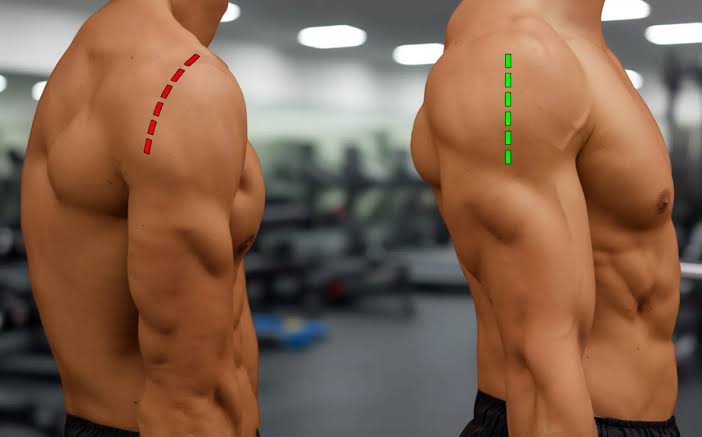
It can be very challenging to maintain good posture all the time in today’s busy world.
Due to long hours of work, excessive smartphone use and extended periods of sitting, we can start experiencing issues with our body positioning.
Rounded shoulders are a common issue. They occur when the shoulders roll forward beyond their natural position.
This frequently leads to the development of poor posture habits in the upper body.
Although rounded shoulders may not appear to be a major concern to some people, the associated pain and discomfort can also result in mobility issues. Using a posture corrector belt may provide additional support in maintaining better shoulder alignment and posture.
It is extremely important to understand rounded shoulders and their causes to develop better posture habits.
How Rounded Shoulders Develop
A rounded shoulder is usually observed as your shoulders are highly oriented forward, past their normal position. Normally, your shoulders need to be at ease as well as positioned straight.
However, rounded shoulders cause your shoulders to roll inwards. This is often caused by long periods of activities that require you to reach forwards such as typing, writing, driving or using your smartphone.
Rounded shoulders can occur gradually and often aren’t noticed as people get used to the position.
Common signs include:
- Shoulders that slope or curve forwards
- Hunched upper back
- Forward head posture
- Tightness across the chest
- Neck and shoulder blade stiffness
- Difficulty sitting upright
Understanding Rounded Shoulders & Upper Back Posture
Your thoracic spine (middle/upper back) has a natural curve. This helps to distribute forces as well as support your rib cage.
As your shoulders are placed in the same uncomfortable position for a long time, your upper back may tend to be rounded.
It can create an issue in the coordination of the shoulder blade, ribs and cervical spine. In case there is too much rounding of the upper back area, then it can cause the head to project forward.
Your neck muscles may therefore have added stress that also disturbs the normal positioning of the shoulder blades.
Common Causes Of Rounded Shoulders
1. Long Periods of Computer Work
One of the most common causes of rounded shoulders is spending long periods of time working on your computer. You may tend to naturally lean forward when your monitor is too low or keyboard is too far away. This causes your shoulders to roll in and your upper back to round. Over a period of time, this can enhance poor posture habits. Ensuring your monitor is at the correct height, keyboard is easy to reach as well as using supportive seating can help.
2. Too Much Smartphone Use
The smartphones make us tilt down and forward as we use them. At times, when browsing through our social media accounts or viewing any videos, it’s possible that we end up sitting in a bent position without realizing it. It might make us suffer from stress on the shoulders and the upper back.
3. Weak Upper Back Muscles
The muscles around your shoulder blades play a significant role in your posture of the upper body. If these muscles are too tensed or not flexible enough, then along with slouching for long periods, it can result in rounded shoulders. It is always helpful to stretch out the chest lightly as well as do some upper body mobility work.
4. Tight Chest Muscles
The pectoral muscles in your chest help to control your shoulders. If these muscles are tight or inflexible, it can cause your shoulders to be rounded when combined with long periods of slouching. Stretching your chest gently as well as doing regular upper body mobility exercises can help.
5. Sedentary Lifestyle
Sitting down for long hours will make you get into the habit of having poor posture leading to rounded shoulders as well as a stiffened upper back. Regular walking, physical exercise as well as stretching may help enhance your musculoskeletal system.
Effective Exercises to Improve Rounded Shoulders And Upper Back Alignment
Exercise can play an important role in improving your posture. A good routine will include chest mobility, strengthening your upper back, improving your shoulder blade control along with general activity. Examples include
- Chest Stretch
- Shoulder Blade Squeezes
- Resistance Band Rows
- Wall Angels
- Thoracic Extensions
How Posture Support Can Help
It takes effort as well as constant practice to get rid of your rounded shoulders. Nevertheless, it might be hard for you to maintain the proper posture of your upper body all day long.
Particularly, if you have to sit at your desk for a lot of time during the day. Although you understand what proper sitting posture is, you might start slumping from exhaustion.
In this case, extra postural support could be beneficial. A posture corrector can help to provide gentle support to your shoulders along with the upper back.
This posture brace can help you become more aware of your shoulder position.
If you use your computer regularly, smartphone or have a sedentary lifestyle a good posture corrector can help remind you not to round your shoulders too much as well as assist in developing correct posture habits.
Daily Recommendations for Improving Alignment in the Upper Back Region
Ergonomic Workspace
Make sure that your screen is positioned at an appropriate height to be able to see it properly. It will help you avoid the tendency to lean forward. It is necessary to use a chair which will give you proper support as well as allow you to rest your feet to maintain comfortable and correct body posture.
Avoid Sitting for a Long Time
Long sitting can increase body fatigue along with muscle stiffness. Try to take regular breaks during the day to stand up, stretch and change positions.
Limit Overuse of Smartphone
Try to keep your smartphone at a comfortable height. Don’t continually bend your neck and shoulders forwards. Try to support your arms and don’t spend long periods scrolling without taking breaks.
Exercises For Upper Body Strengthening
The exercises focusing on your upper back as well as shoulders could help you enhance your stamina along with correct body posture.
When To Get Professional Help
In case you have continuous pain in your neck, shoulder, limited or stiffness in your upper back, it is advisable that you visit a physiotherapist.
This will enable them to examine your posture, shoulder mobility, strength as well as movements to find out the cause of the problem.
On the basis of their analysis, recommendations could be offered for improving physical fitness, movement capability, posture and ergonomic changes as well.
In case you experience numbness, tingling or severe pain, you should consult your doctor.
Conclusion
Rounded shoulders as well as incorrect alignment in the upper back are common problems occurring nowadays due to our lifestyle.
The reasons that can cause rounded shoulders include sitting at the computer for a long time, constant use of smartphones, leading a sedentary life, muscle fatigue and improper setup of the workspace.
It can eventually lead to muscle pain as well as restriction in the range of motion of your shoulders with discomfort, pain along with stiffness. Building your upper back muscles, stretching your pectorals along with modifying to an ergonomic workspace can be beneficial to improve body posture.
In case you want some additional help with your posture, you can use a posture corrector. It can be used to help encourage the right positioning of your shoulders. In general, having good posture in your upper back requires you to have strong muscles, flexibility, control as well as awareness of how your body aligns.