

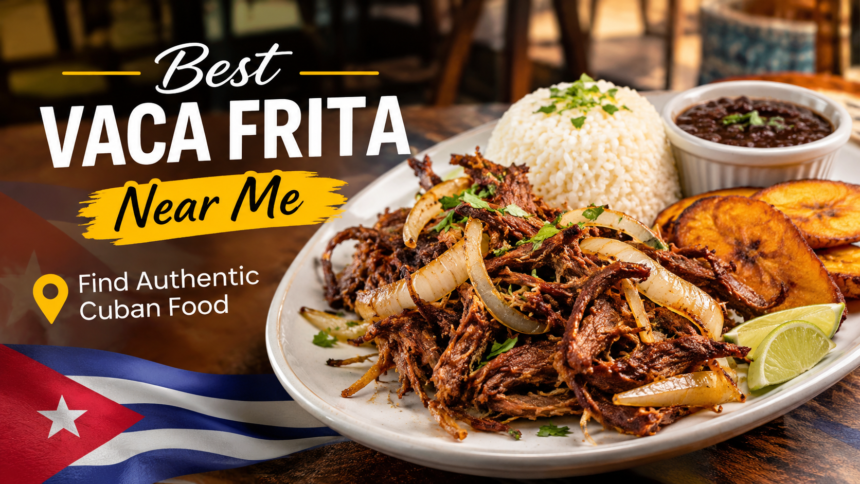
The best vaca frita near you is usually found at a Cuban restaurant that serves tender, shredded beef with crispy golden edges, sautéed onions, fresh garlic, and a bright citrus flavor. A great plate combines juicy meat, a satisfying crunch, and traditional sides such as white rice, black beans, and fried plantains.
If you’ve searched for “best vaca frita near me,” you’re probably craving something more exciting than an ordinary beef dish. You want well-seasoned meat, freshly prepared ingredients, and a meal that feels worth the trip.
Vaca frita is one of Cuba’s most satisfying comfort foods. Its rich beef flavor, crispy texture, and simple preparation have made it a favorite at Cuban restaurants, particularly in communities with strong Cuban culinary traditions.
Finding an excellent version takes more than choosing the closest restaurant. Knowing what authentic vaca frita should taste like can help you make a better decision.
What Is Vaca Frita?
Vaca frita is a traditional Cuban dish made with cooked, shredded beef that is seasoned and pan-fried until the edges become crispy.
The name translates to “fried cow,” but the preparation is more interesting than that simple description suggests.
The beef is typically simmered until tender, pulled apart into thin strips, and seasoned with garlic, lime juice or sour orange juice, salt, and other spices. It is then fried in a hot pan, often with sliced onions.
The result is a dish with two appealing textures: a tender interior and crispy, browned edges.
Unlike beef dishes covered in heavy sauces, vaca frita gets much of its character from the meat itself. Garlic, citrus, and onions add flavor without overwhelming the beef.
It is commonly served with rice, beans, and plantains, making it a filling meal for lunch or dinner.
Where to Find the Best Vaca Frita Near Me
The easiest way to find good vaca frita nearby is to start with restaurants that specialize in Cuban cuisine.
Open Google Maps or your preferred restaurant search app and enter “best vaca frita near me” or “Cuban restaurants serving vaca frita.”
Look beyond the first result. A restaurant’s distance and overall rating are useful, but neither guarantees that it makes an excellent version of this particular dish.
Start by checking the restaurant’s menu. Some establishments serve vaca frita as a regular main course, while others offer it only at certain times or as a special.
Next, examine customer photographs. Pictures of actual meals can tell you more than polished promotional images.
Look for beef with visible browned edges, generous onions, and a fresh appearance. The meat should look properly seared rather than sitting in a watery sauce.
Finally, read recent reviews that specifically mention vaca frita. A restaurant may be famous for Cuban sandwiches or coffee without being particularly good at preparing crispy shredded beef.
A few minutes of research can make the difference between an average meal and a memorable one.
What Makes Great Vaca Frita?
Excellent vaca frita depends on the balance between tenderness, crispiness, and seasoning.
The beef should be tender enough to pull apart easily but crispy enough to provide texture in every few bites.
If the meat is completely soft, it may not have spent enough time in the hot pan. If every piece is extremely dry and hard, it may have been fried too long.
The best versions have a mix of textures. Some pieces are deeply browned, while others remain juicy and tender.
Garlic is another important ingredient. It should be noticeable without tasting burnt or bitter.
Fresh citrus adds a pleasant sharpness that balances the richness of the beef. The flavor should taste lively rather than excessively sour.
Onions also matter. They should be softened and lightly browned, adding a gentle sweetness that complements the savory meat.
When these elements come together, vaca frita becomes much more than ordinary fried beef.
How Restaurants Prepare Vaca Frita
Making traditional vaca frita involves several stages, which explains why the finished dish can develop such a distinctive texture.
First, the cook chooses a suitable cut of beef. Flank steak is a common option because its long muscle fibers separate into strips after slow cooking. Other cuts that become tender when simmered may also be used.
The beef is cooked in water or broth until tender enough to shred.
After cooling slightly, the meat is separated into thin strands and seasoned with garlic, citrus juice, salt, and sometimes cumin or black pepper.
The seasoned beef is then transferred to a hot pan with oil.
This final stage is especially important. The cook spreads the meat across the cooking surface so it can brown instead of steaming.
Cooking in smaller batches helps the beef develop those crispy edges.
Sliced onions may be fried alongside the beef or prepared separately and added before serving.
Traditional preparations vary between families and restaurants, but tender beef, bold seasoning, and a crisp finish remain the defining characteristics.
Best Places to Look for Vaca Frita
Not every restaurant offering Latin American food prepares vaca frita in the same way.
Traditional Cuban restaurants are often the most promising starting point. They are more likely to feature familiar Cuban dishes, including ropa vieja, Cuban roast pork, black beans, and rice.
Family-run Cuban restaurants can also be worth exploring. Some prepare dishes using recipes passed down through generations, although the quality still depends on the individual kitchen.
Cuban cafés and casual neighborhood restaurants may offer excellent vaca frita at more accessible prices than formal dining establishments.
In places such as Miami, Florida, vaca frita is particularly well represented. The Infatuation’s March 2026 Miami dining guide highlights restaurants including La Casita, Habana Vieja, La Carreta, and Morro Castle for their versions of the dish.
These are examples from Miami, not necessarily restaurants near your current location.
If you live somewhere with fewer Cuban restaurants, try searching specifically for the dish rather than relying on the restaurant category alone.
A Latin American restaurant may have vaca frita on its menu even when it does not describe itself primarily as Cuban.
How to Choose a Good Restaurant
A little attention to restaurant reviews can save you from a disappointing meal.
Start with recent feedback. Restaurants change cooks, recipes, menus, and management, so an excellent review from several years ago may not reflect today’s experience.
Give extra attention to customers who describe the beef itself.
Comments mentioning crispy edges, tender meat, balanced garlic seasoning, and fresh onions are more useful than generic statements such as “great food.”
Photographs are equally helpful. Look at several customer-uploaded images rather than judging the restaurant from one picture.
Check whether the establishment regularly serves Cuban main courses. A kitchen preparing vaca frita frequently may have more practice with its particular cooking technique.
You can also call and ask whether the beef is finished in the pan when ordered.
Freshly crisped vaca frita is generally preferable because its texture is best immediately after frying.
Finally, compare portion sizes, included sides, and current menu prices. A cheaper plate is not always better value if the serving is small or the sides cost extra.
Best Side Dishes With Vaca Frita
Vaca frita is delicious on its own, but traditional side dishes help complete the meal.
White rice is one of the most common choices. Its mild flavor balances the strongly seasoned beef and provides a simple base for the onions and citrus juices.
Black beans add a creamy texture and savory flavor. When served alongside rice, they turn the dish into a substantial Cuban-style meal.
Sweet fried plantains provide a pleasant contrast to the salty, garlicky beef. Their natural sweetness works particularly well with the citrus seasoning.
Tostones, made from twice-fried green plantains, are another popular option. They offer a firmer, crispier texture than sweet plantains.
Yuca with garlic-citrus sauce is also an excellent pairing. The soft root vegetable absorbs the flavorful sauce and complements the crispy meat.
If you’re ordering vaca frita for the first time, white rice, black beans, and either sweet plantains or tostones make a dependable combination.
Vaca Frita vs. Ropa Vieja
Vaca frita and ropa vieja are two popular Cuban beef dishes, but they offer noticeably different eating experiences.
Both can begin with beef that is slowly cooked until tender and then shredded.
The main difference is what happens afterward.
Vaca frita is pan-fried until crispy, often with garlic, citrus, and onions. It is generally served without a heavy tomato sauce.
Ropa vieja is a softer, saucier dish in which shredded beef is cooked with tomatoes, peppers, onions, and seasonings.
Vaca frita has a stronger contrast between crispy and tender textures. Ropa vieja is moist and rich, with a sauce that mixes naturally into rice.
If you prefer browned meat, garlicky flavors, and a little crunch, vaca frita may be the better choice.
If you enjoy slow-cooked beef in a flavorful sauce, ropa vieja might suit you more.
Neither is automatically better. They simply offer two different ways to enjoy Cuban shredded beef.
How Much Does Vaca Frita Cost?
The price of vaca frita depends on the restaurant, location, portion size, and included side dishes.
A neighborhood Cuban café may charge less than a full-service restaurant in a major tourist area.
Some restaurants include rice, beans, and plantains in the listed price. Others charge separately for certain sides or upgrades.
Before ordering, check whether the menu price covers the entire plate.
If you are comparing two restaurants, consider the quantity of beef, freshness, and side portions rather than price alone.
Delivery fees and service charges can also make an otherwise affordable meal more expensive.
Because restaurant prices change frequently, the latest online menu or a direct call is more reliable than an old review.
Can You Order Vaca Frita for Delivery?
Yes, many Cuban restaurants offer vaca frita for takeaway or delivery, depending on their location and delivery arrangements.
However, there is one thing worth considering: texture.
Vaca frita tastes especially good when the beef comes straight from the pan. During delivery, steam can collect inside the container and soften the crispy edges.
For the best experience, choose a nearby restaurant with a reasonable delivery distance.
If possible, request that wet sauces and extra toppings be packed separately.
When the meal arrives, check the beef before adding any sauce.
If it has lost some crispiness, a brief reheating in a lightly oiled skillet can help restore the browned edges. Heat it thoroughly without letting the meat dry out.
Dining in is still an excellent choice if the crispy texture is your main priority.
Common Mistakes When Ordering
One common mistake is choosing a restaurant based entirely on its overall star rating.
A restaurant may receive excellent reviews for its atmosphere, service, or sandwiches while offering a less impressive vaca frita.
Another mistake is confusing vaca frita with other Cuban beef dishes.
For example, a Cuban frita is a seasoned burger-style sandwich, not the same thing as vaca frita.
Ordering without checking the sides can also lead to disappointment. A plate may include only rice, while another comes with beans and plantains.
Finally, don’t assume that the darkest-looking beef is necessarily the best.
Deep browning adds flavor, but burnt or excessively dry meat is not a sign of superior cooking.
The goal is a satisfying balance between crisp edges and tender beef.
Tips for Your First Order
If you’ve never eaten vaca frita before, start with a traditional plate rather than a modern variation.
Ask for the beef with sautéed onions, white rice, black beans, and plantains.
A little extra lime on the side can be useful if you enjoy a brighter citrus flavor.
For a more filling meal, choose yuca or an additional side of beans, if available.
When the plate arrives, try a bite of the beef on its own before mixing it with the sides. This makes it easier to appreciate the seasoning and texture.
Then combine the meat with rice, onions, and beans to experience how the flavors work together.
If you enjoy the dish, try it at another Cuban restaurant on your next visit. Comparing different preparations is a good way to discover your personal favorite.
Is Vaca Frita Worth Trying?
Vaca frita is worth trying if you enjoy flavorful beef dishes with a combination of crispy and tender textures.
Its appeal comes from relatively simple ingredients prepared with care.
Instead of relying on a complicated sauce, the dish builds flavor through slow cooking, garlic, citrus, onions, and high-heat frying.
It is also versatile enough for a casual lunch, a family meal, or a satisfying restaurant dinner.
For someone exploring Cuban cuisine for the first time, vaca frita offers a memorable introduction to its savory, citrus-forward flavors.
And for people who already enjoy Cuban food, discovering a restaurant that consistently prepares excellent vaca frita can be especially rewarding.
Frequently Asked Questions
1. Where can I find the best vaca frita near me?
Search Google Maps for “best vaca frita near me” or “Cuban restaurants near me.” Compare recent customer reviews, menu listings, and food photographs. Prioritize restaurants with positive feedback specifically mentioning their vaca frita.
2. What is authentic Cuban vaca frita made of?
Traditional vaca frita is made with cooked, shredded beef, garlic, citrus juice, onions, oil, and seasonings. Flank steak is a common choice, although other slow-cooking beef cuts can also be used. The meat is fried until the edges develop a crispy texture.
3. Is vaca frita spicy?
Vaca frita is generally not a spicy dish. Its main flavors come from garlic, onions, salt, and citrus. Some restaurants use additional spices or offer hot sauces, but strong chili heat is not a defining feature.
4. What is the difference between vaca frita and ropa vieja?
Vaca frita is shredded beef that is fried until crispy, usually with garlic, citrus, and onions. Ropa vieja is shredded beef cooked in a tomato-based sauce with vegetables and seasonings. Vaca frita is typically drier and crispier, while ropa vieja is soft and saucy.
5. What should I order with vaca frita?
White rice, black beans, fried sweet plantains, and tostones are popular choices. Yuca with garlic-citrus sauce is another delicious option. Rice and beans are a particularly reliable pairing for a first-time order.
6. Is vaca frita gluten-free?
Traditional vaca frita ingredients do not usually require wheat or gluten-containing products. However, restaurant recipes may include additional sauces or seasonings, and cross-contact can occur during preparation. Anyone avoiding gluten for medical reasons should confirm the ingredients and kitchen procedures with the restaurant.
7. Can I get vaca frita for takeaway?
Yes, many restaurants offer takeaway or delivery where available. Keep in mind that the meat may become less crispy during transport. Ordering from a nearby restaurant and reheating briefly in a skillet can help preserve its texture.
8. What cut of beef is best for vaca frita?
Flank steak is a traditional and popular choice because its long fibers shred well after cooking. Skirt steak and some chuck cuts can also work. The most important factors are cooking the beef until tender and frying it properly afterward.
9. Is vaca frita the same as a Cuban frita burger?
No. Vaca frita is a dish of crispy shredded beef, generally served on a plate with traditional sides. A Cuban frita is a seasoned burger-style sandwich, commonly topped with thin potato sticks. Despite the similar names, they are different foods.
10. How can I tell if vaca frita is freshly prepared?
Freshly finished vaca frita generally has warm, crisp edges, tender beef, and fragrant onions. If the dish arrives lukewarm, soggy, or without noticeable browning, it may not deliver the texture you expect. Asking whether the beef is crisped to order can also help.
Final Thoughts
Finding the best vaca frita near me is about more than locating the nearest Cuban restaurant. The most satisfying meal comes from a kitchen that understands how to combine tender shredded beef, crispy edges, fresh garlic, citrus, and properly cooked onions.
Take a few minutes to explore menus, check recent customer photographs, and read reviews that mention the dish specifically.
Whether you prefer a small neighborhood café or an established Cuban restaurant, focus on freshness, flavor, and consistency.
A well-prepared plate of vaca frita, served with rice, black beans, and plantains, is a simple but memorable way to enjoy authentic Cuban cooking.
Sources and Further Reading
The culinary preparation, traditional accompaniments, and restaurant-selection guidance in this article were researched using the following resources:
- TasteAtlas — Vaca Frita — Background on the traditional Cuban dish, ingredients, and cooking method.
- CiberCuba — Cuban Fried Beef Recipe — Cuban recipe featuring shredded beef, garlic, citrus, and onions.
- The Infatuation — Best Vaca Frita in Miami — Restaurant reviews and examples of well-regarded preparations.
- CasaBlanca Cuban Grill — Restaurant Menu — Restaurant menu showing traditional vaca frita and its accompanying side dishes.