
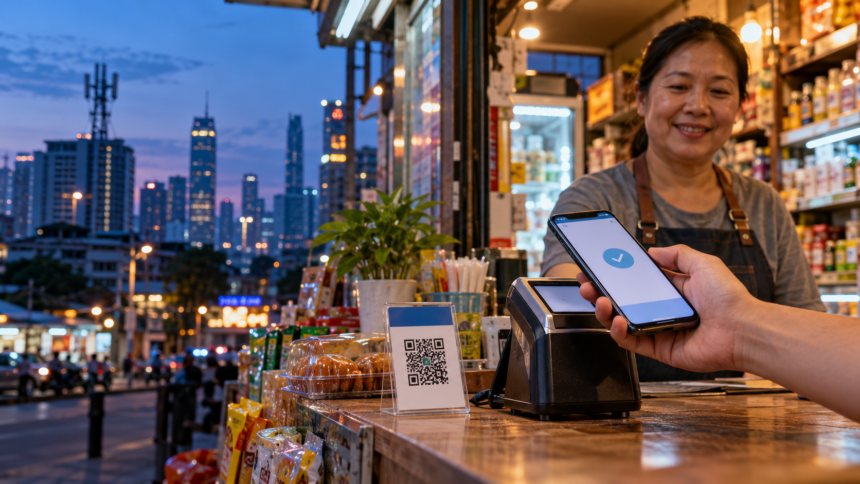
Paying a bill from your phone can take less time than finding your wallet. Behind that simple action, several businesses may be working together: a mobile operator, a payment provider, a bank, and the company receiving your money.
Fintechasia .net telekom is a search phrase connected with FintechAsia.net’s coverage of the relationship between telecommunications and financial technology. Understanding the topic starts with separating the website’s content from the financial services it discusses.
This article explains what the phrase refers to, how telecom networks support digital finance, and what real examples across Asia reveal about the benefits and limitations.
What Does the Term Mean?
FintechAsia.net describes itself as a blog covering technology, business, finance, cryptocurrency, and trading. It also publishes content under a Telekom category, including coverage of telecom partnerships, payments, mobile wallets, and digital credit.
Based on those pages, the phrase is best understood as a reference to content about telecom and fintech. The material reviewed does not establish “FintechAsia .net Telekom” as a separate bank, mobile wallet, or telecom operator.
That distinction matters. An article describing a payment service is different from the company operating that service. Likewise, a familiar company appearing in an article does not establish a commercial partnership with the publisher.
Why Telecom Matters
Financial apps need a way to communicate with payment systems. Mobile networks provide that connection when customers use mobile data, while some services also support text-based channels on basic phones.
The telecom contribution can extend beyond connectivity. Operators may supply billing systems, customer distribution channels, and network information that helps payment providers assess suspicious activity.
However, the businesses involved have different responsibilities. The mobile operator providing your connection may not be the institution holding your money. Understanding who operates the wallet or account makes it easier to find the right support when something goes wrong.
The Scale of Digital Finance
The World Bank’s Global Findex 2025 findings show that 79% of adults worldwide had a financial account in 2024, compared with 74% in 2021. Around 1.3 billion adults still lacked an account. These are global figures, rather than statistics for Asia alone.
GSMA’s State of the Industry Report on Mobile Money 2026 reports that mobile money services processed more than $2 trillion globally during 2025 and reached 2.3 billion registered accounts. Registered accounts should not be read as a count of unique people or regular users.
These measures describe different things: the World Bank tracks adult financial inclusion, while GSMA reports mobile money industry activity. Together, they show why both access and actual usage deserve attention.
How Mobile Wallets Work
A mobile wallet gives customers a way to make supported payments through a financial service linked to their phone. Depending on the provider, customers may add money through bank transfers, payment cards, or authorized cash-in agents.
Consider a worker who receives cash but needs to send money home. A nearby agent can provide a bridge between physical cash and a digital balance, reducing the need for a long trip to a bank branch.
bKash’s own service information distinguishes cash-in, cash-out, transfers, merchant payments, and mobile recharge. These are separate functions, even when customers access them through the same service.
Buying airtime from a wallet does not mean airtime and wallet money are interchangeable. The permitted ways to fund, spend, or withdraw a balance depend on the provider.
What Carrier Billing Does
Direct carrier billing lets customers charge an eligible purchase to their mobile phone account. Boku explains that the amount can be added to a monthly phone bill or deducted from a prepaid balance.
For example, a customer buying digital content may choose carrier billing at checkout instead of entering card details. The payment then follows the arrangements between the merchant, payment provider, and mobile operator.
Carrier billing differs from transferring money through a wallet. It uses the phone account as a payment method for supported purchases, rather than providing every function of a bank account or mobile money service.
Availability, spending limits, subscription terms, and refund arrangements still matter. A convenient checkout should make the full cost easy to understand.
Real Examples in Asia
GCash in the Philippines illustrates the commercial connection between telecom and fintech. Globe’s full-year 2025 results identify Mynt as GCash’s parent company and describe its payments, lending, and financial management activities. Globe also reports its equity share in Mynt’s earnings.
This documented corporate relationship helps explain why telecom companies can have a direct business interest in financial services alongside their connectivity operations.
bKash in Bangladesh illustrates another part of the picture: access through different kinds of phones. Its official website says customers can use the app or access its USSD platform by dialing *247#, with USSD transactions available without an internet connection.
These examples demonstrate real telecom-fintech connections. They are discussed here as independent businesses; the reviewed sources do not establish them as products of FintechAsia.net.
Benefits for Everyday Users
The practical benefit of mobile finance is often time saved. Paying a household bill, receiving money, or checking a transaction record from a phone can reduce travel and make routine tasks easier to fit around work.
For small businesses, digital payment records can also help document cash flow. The World Bank identifies such records as potentially useful when merchants apply for credit. A transaction history can support an application, but it does not guarantee approval.
Convenience also depends on local conditions. A wallet becomes more useful when nearby merchants accept it, agents can handle cash transactions, and customers can get help when payments fail.
Access Still Has Barriers
A mobile signal alone does not make a financial service accessible. Customers may still face device costs, unfamiliar menus, identification requirements, or difficulty understanding charges.
Basic-phone access can address part of that problem. bKash’s USSD channel demonstrates that some transactions do not require a smartphone app or mobile internet. It still depends on access to the relevant mobile network.
The World Bank also emphasizes affordability, appropriate product design, consumer protection, and infrastructure that allows payment systems to work together. Opening accounts is only part of financial inclusion; people must be able to use them meaningfully.
Security and Trust
Telecom networks can contribute useful security signals. GSMA describes tools such as SIM Swap, which detects recent changes to the SIM associated with a number, and Number Verification, which checks the relationship between a phone number and the connecting device.
These tools can help financial providers assess risk. For instance, a recent SIM change might prompt an additional check before a sensitive action.
They do not establish that every payment is legitimate or replace all customer identity checks. Security also depends on how the financial provider handles account access, suspicious transactions, and customer reports.
Trust requires a clear route to help. Customers need to know whom to contact, how to report an unauthorized payment, and what information will be needed to investigate it.
What to Watch Next
The developments worth following are those that make services more useful: payments between different providers, wider merchant acceptance, clearer fees, and stronger fraud controls.
Network APIs—interfaces that let software use selected telecom capabilities—are another area to watch. GSMA’s Open Gateway work shows how standardized network information can support authentication and fraud prevention. Fusion
For readers researching fintechasia .net telekom, the strongest evidence comes from named services, official disclosures, and clearly dated industry research. Claims about future growth are more useful when they explain what changes for the customer.
FAQs
What is fintechasia .net telekom?
It is a search phrase appearing in connection with FintechAsia.net’s telecom-fintech coverage. The reviewed pages discuss the relationship between mobile networks and financial services rather than establishing a separate financial product under that name.
Is FintechAsia.net a bank?
Its About page presents it as a blog covering technology, business, and finance. That page does not establish it as a licensed bank or payment provider.
How do telecom companies support fintech?
They can provide mobile connectivity, carrier billing, distribution channels, and network signals used in security checks. Their exact role depends on the service and partnership.
Can mobile financial services work without internet access?
Some can. For example, bKash supports a USSD channel accessed through *247# without an internet connection. Supported functions and availability depend on the provider.
Are mobile wallets and carrier billing the same?
No. A wallet supports the transactions offered by its financial provider. Carrier billing charges eligible purchases to a mobile phone bill or prepaid balance.
Are GCash and bKash owned by FintechAsia.net?
The reviewed sources do not establish such ownership. Globe documents the GCash–Mynt relationship, while bKash publishes information about its own services. Their inclusion in coverage should not be treated as evidence of affiliation with the publisher.
Does a telecom connection make a payment service safe?
Connectivity alone does not establish safety. Network checks can help detect risk, but providers also need effective account security, fraud controls, and customer support.
Read also From Website RedAndWhiteMagz.com Blog: A Reader’s Guide