

There is a moment, about an hour before dusk, when the coastal road south of Athens starts to fill with cars all heading in the same direction. Some carry families from the suburbs, others are hired minibuses full of visitors, a few are couples on scooters. They are all going to the same place: the southernmost tip of Attica, where a ruined temple stands on a cliff above the sea. Cape Sounion is less than seventy kilometres from the centre of Athens, and yet it feels like the edge of the world.
The Temple of Poseidon was built in the fifth century BC, around the same time as the Parthenon, and for a similar reason. Athens was a naval power, its wealth came from the sea, and it made sense to honour the god who ruled it on the last piece of land sailors saw as they left home. For anyone arriving by ship, the white columns on the headland meant Athens was close. Standing there today, it is easy to picture those ancient crews scanning the horizon for exactly that sight.
Part of the appeal is the journey itself. The road from Athens follows the coast for most of the way, passing through Glyfada, Vouliagmeni and Varkiza before the landscape turns quieter and rockier. There are small coves where you can stop for a swim, fish tavernas where the catch of the day is displayed on ice, and long stretches where the only company is the sea on one side and dry hills on the other. Many visitors choose a cape sounion tour so they can enjoy the drive without worrying about parking, timing or the narrow bends near the end, and so they have someone to explain the history once they arrive.
The temple has a famous piece of graffiti. On one of the columns, carved into the marble, is the name of Lord Byron, who visited in the early nineteenth century. Whether he carved it himself is debated, but it has become part of the monument’s story, and people inevitably go looking for it. Byron also wrote about Sounion in his poetry, which helped make the site a stop on the romantic tours of Greece long before mass tourism existed.
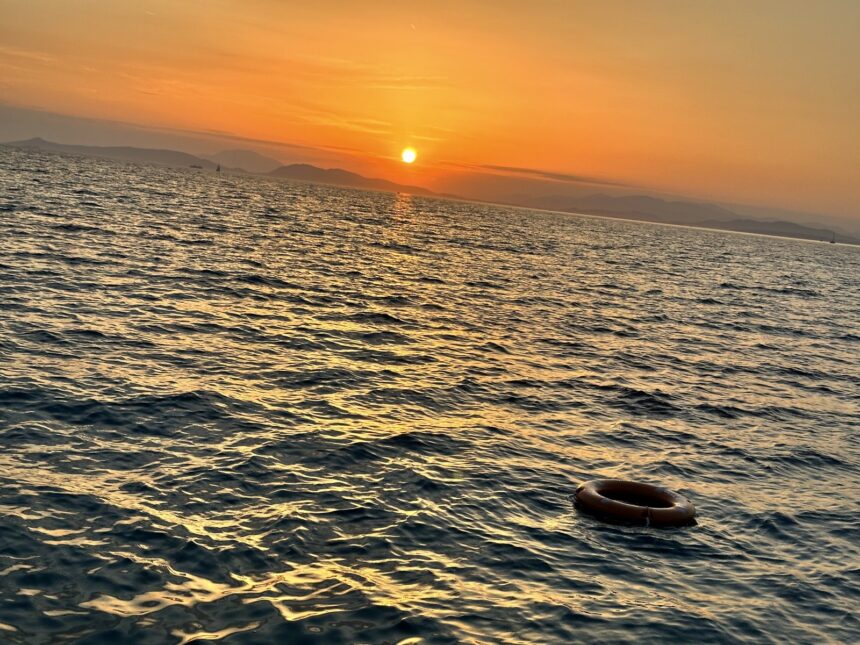
Then there is the sunset. On a clear evening, the sun drops towards the islands of the Saronic Gulf and the columns glow orange, then pink, then fade into silhouette. It is crowded, of course. People jostle for the best spot along the low wall on the western side, and the car park is full well before the light starts to change. It is worth arriving early, walking around the site while it is still quiet, and then finding a place to sit and wait.
What surprises most visitors is how little the crowd matters in the end. Once the sun touches the water, conversations stop, phones come down, and for a few minutes everyone is simply looking west. It is one of those places where a very old reason for being there, watching the sea from high ground, still works perfectly well.