

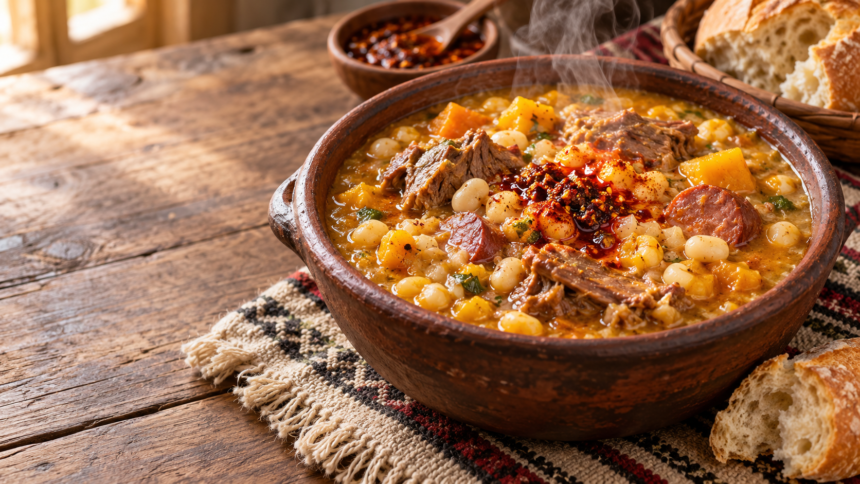
To find the best locro argentino near you, start with Argentine restaurants, regional South American eateries, and community food events, then check whether locro is on the menu today. It’s a thick, slow-cooked stew traditionally made with corn, squash, beans, and meat. Recipes vary by region and family, and restaurants may serve it as a seasonal special rather than a permanent menu item.
| At a Glance | Details |
|---|---|
| What it is | A hearty Argentine stew with Andean roots |
| Common ingredients | Corn, squash, beans, and often beef, pork, or sausage |
| Texture | Thick and creamy from the long cooking and softened ingredients |
| Traditional occasions | Argentine national holidays, especially May 25 and July 9 |
| What to confirm | Whether it’s available today and what the current recipe includes |
What makes locro argentino distinctive?
Locro is built around corn and squash, with beans and—depending on the recipe—meats such as beef, pork, bacon, or sausage. As it cooks, the ingredients soften and thicken the broth, giving the stew a substantial, spoonable texture. Some versions include pork skin or trotters; others have a simpler combination of corn, squash, and vegetables. There is no single recipe that defines every regional or family version.
A bowl may come with a small dish of spicy sauce, often made with chili, onion, and paprika. You can add it to taste, so ask whether the sauce is served separately if you prefer a milder meal. That combination of a rich stew and a sharper, spicy topping is a useful clue when you’re comparing menu descriptions.
Locro is associated with Argentina’s Andean and northwestern culinary traditions, and it has become part of national celebrations. It is especially connected with May 25, which commemorates the May Revolution, and July 9, Argentina’s Independence Day. Around those dates, restaurants and community groups may offer it even if it isn’t normally on the menu.
How to find locro near you
Start with a map or restaurant search using a few variations: “locro near me,” “Argentine restaurant locro,” and “locro argentino [your city].” Searching for Argentine restaurants can surface promising places that don’t mention the dish in their main listing. Also look at regional South American restaurants, bakeries with hot food, and local cultural festivals.
Check the restaurant’s current menu and recent posts, but don’t assume an old menu listing means locro is available today. Since it can take time to prepare and may be made in batches, call or message before travelling. Ask directly: “Are you serving locro today?” If the answer is yes, you can also ask whether it contains pork or other meats, whether the chili sauce comes on the side, and whether they have a vegetarian version.
If you’re in Argentina, northern regional restaurants, traditional folk venues, food markets, and local fairs are useful places to look. Argentina’s official tourism guide describes locro as a dish with regional variations, including Jujuy’s huaschalocro and Santiago del Estero’s pulsudo locro. Outside Argentina, Argentine-owned restaurants and cultural events may be better leads than general “Latin food” searches.
How to judge a promising bowl
A menu description should give you a sense of the ingredients: look for corn, squash, beans, and a mix of meats, though the exact recipe can differ. A restaurant’s use of the word “locro” alone doesn’t tell you how it will taste or whether it matches a particular regional style. Ask what goes into that day’s pot if you have dietary needs or want to know what kind of version they make.
Look for a thick, hearty stew rather than a thin soup. The corn and squash should be cooked until tender and integrated into the broth; a well-prepared bowl is filling, with the ingredients contributing to its texture rather than sitting in a watery base. The spicy sauce served separately can add heat and brightness without overpowering the stew.
Reviews can help, especially when they mention the dish itself, but confirm details with the restaurant. Availability, recipe, portion size, and accompaniments may change. For a first try, ask whether the portion is intended as a main course and whether bread or another side is included.
When is locro easiest to find?
The best-known opportunities are around May 25 and July 9, when locro is traditionally served for Argentine patriotic holidays. Some restaurants offer it only on those dates or during colder months, while others keep it as a regular special. Community fundraisers and cultural celebrations can also feature a large shared pot.
If your search comes up empty, try again closer to a holiday or ask an Argentine restaurant whether it prepares locro by preorder. Because it is a slow-cooked dish, advance notice may matter. Check the pickup time and serving size before placing an order.
FAQs
Is locro argentino spicy?
The stew itself is not necessarily very spicy. A chili-based sauce is often served alongside it, so you can control how much heat to add. Recipes differ, so check with the restaurant if spice level matters to you.
Does traditional locro contain meat?
Many versions include beef, pork, bacon, or sausage, and some recipes use additional cuts. Ingredients vary, so ask the restaurant about the specific batch. A vegetable-based option should be confirmed rather than assumed.
Is locro the same as a corn or squash soup?
Not quite. Locro is generally a thick, hearty stew that combines corn and squash with beans and often meat. The long cooking gives it a more substantial texture than a typical soup.
Why can’t I find locro on a restaurant’s regular menu?
Some places serve it only for special occasions or as a rotating daily dish. Check the restaurant’s latest menu or contact it directly, especially outside Argentina’s May and July national holidays.
Conclusion
The best locro argentino near you is the one that’s freshly available and suits your taste and dietary needs. Search Argentine and regional restaurants, check for holiday specials, and confirm the ingredients and availability before you go.
Read also TheJavaSea.me Leaks AIO-TLP371: What Is Known, Security Risks, and How to Stay Safe